
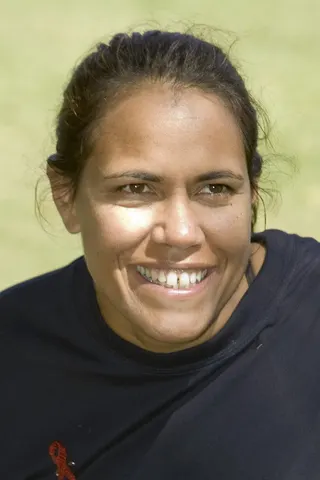
Olympic champion sprinter
Cathy Freeman
- Born: 16 February 1973, Mackay, Queensland, Australia
- Age: 53
Cathy Freeman is an Australian sprinter, 53, best known for winning the 400 metres at the Sydney 2000 Olympics after lighting the cauldron. She is a two-time world champion and a Companion of the Order of Australia. Born in Mackay, Queensland, she was a…
Cathy Freeman: films and works

Sydney 2000: The Best Ever
2025 · TV special
Self (Olympic gold medallist)
Two-part documentary about the 2000 Games, with Freeman and Ian Thorpe among the athletes who look back.[29]

Marie-Jo
2024 · Documentary
Self (interviewee)
Documentary about the career of Marie-José Pérec, Freeman's great 400 m rival; TMDB lists Freeman in its cast.[29]
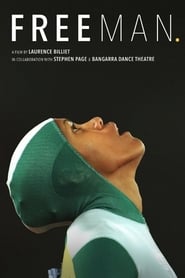
Freeman
2020 · Documentary
Self (subject)
58-minute film by Laurence Billiet on the 2000 Olympic run and the pressure behind it, first shown on ABC on 13 September 2020; the most-watched Australian documentary of 2020.[1][9][10]
Where to watch it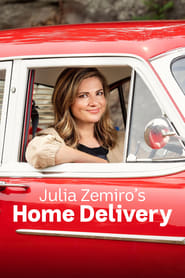
Julia Zemiro's Home Delivery
2017 · TV series
Self (guest)
Series 5, episode 2 (first shown 8 February 2017), in which the host visits places that matter to Freeman.[25]
- Born to Run: My Story


- Cathy: Her Own Story
Cathy: Her Own Story
2003 · Book
Author, with Scott Gullan
Her autobiography, written with Scott Gullan.[14]


16 Days In September
2000 · Documentary
Self (featured athlete)
Feature-length documentary from 2000 that lists Freeman and Ian Thorpe among the people featured.[29]
About Cathy Freeman
Cathy Freeman is an Australian sprinter, 53, best known for winning the 400 metres at the Sydney 2000 Olympics after lighting the cauldron. She is a two-time world champion and a Companion of the Order of Australia. Born in Mackay, Queensland, she was a sprinting prodigy: at 16 she ran in Australia's 4 x 100 m relay team that won gold at the 1990 Commonwealth Games in Auckland, which made her the first Aboriginal Commonwealth Games gold medallist. She moved to Melbourne after those Games and trained with Peter Fortune for the rest of her career. She stepped up to the 400 m, won the 200 m and 400 m at the 1994 Commonwealth Games, took Olympic silver behind Marie-José Pérec at Atlanta in 1996 in an Australian record of 48.63, then won the world title in 1997 and again in 1999. Sydney 2000 turned an athlete into a national symbol. Ten days after she lit the cauldron, she won the 400 m final in 49.11 seconds in front of a home crowd, then circled the track with the Aboriginal and Australian flags. Olympedia describes her as the only Aboriginal individual Olympic gold medallist. She carried the Olympic flag at the 2002 Winter Games opening ceremony, ran on Australia's winning 4 x 400 m relay at the 2002 Commonwealth Games, and retired in 2003. Since then she has worked on Indigenous education and reconciliation. She founded the Cathy Freeman Foundation in 2007 (now Murrup), told her story in the children's memoir Born to Run, appeared in series such as Going Bush and Who Do You Think You Are?, and was the subject of the 2020 ABC documentary Freeman. She is the only person to have been both Young Australian of the Year (1990) and Australian of the Year (1998), and in January 2026 she was appointed a Companion of the Order of Australia, the nation's highest civilian honour.
Fun facts about Cathy Freeman
- She is the only person to have been named both Young Australian of the Year (1990) and Australian of the Year (1998).
- She lit the cauldron at the Sydney 2000 opening ceremony, and the documentary Freeman reveals the plan was kept secret from her mother and her agent.
- Her 49.11 gold-medal run in Sydney was slower than the 48.63 she ran for silver in Atlanta in 1996, which is still her personal best and one of the fastest 400 m times in history.
- In the 400 m final she wore Nike's Swift Suit, a full-body suit shaped by wind-tunnel testing, with a different fabric for the upper body, hands, thighs and lower legs.
- After her 2000 win she took a victory lap carrying both the Aboriginal flag and the Australian flag.
- At the opening ceremony of the 2002 Winter Olympics in Salt Lake City she carried the Olympic flag as the representative of Oceania.
- At 16 she became the first Aboriginal Commonwealth Games gold medallist, as part of the 4 x 100 m relay team at Auckland in 1990.
- Her Olympic rival Marie-José Pérec left Sydney before the 400 m, so the showdown between the two never happened.
Famous Cathy Freeman quotes
“I've never wanted anything so much. I've come this far, I may as well go all the way”
Cathy Freeman's career, year by year
1986 to 1990
Boarding-school scholarships
Wins a scholarship to Fairholme College in Toowoomba in 1986, then a sports scholarship to Kooralbyn International School in 1987, where the Romanian coach Mike Danila trains her; her stepfather Bruce Barber also coaches her.[1]
1990
Commonwealth gold at 16
Runs in Australia's 4 x 100 m relay team that wins gold at the Auckland Commonwealth Games, becoming the first Aboriginal Commonwealth Games gold medallist. She moves to Melbourne and starts working with coach Peter Fortune. She is also named Young Australian of the Year.[1][5][7]
1992
First Olympics, Barcelona
Reaches the second round of the 400 m and finishes seventh with Australia's 4 x 400 m relay team. The Sport Australia Hall of Fame records her as the first Aboriginal track and field athlete to represent Australia at an Olympics. She also wins silver in the 200 m at the World Junior Championships in Seoul.[1][3][4][5]
1994
Breakthrough at the Commonwealth Games
Wins both the 200 m (22.25) and the 400 m (50.38) at the Victoria Commonwealth Games and silver in the 4 x 100 m relay. Her lap of honour with the Aboriginal flag draws criticism from the head of Australia's Games team, as the World Athletics review of Freeman recounts.[1][4][9]
1996
Olympic silver in Atlanta
Runs 48.63 in the Atlanta 400 m final, an Australian record, behind France's Marie-José Pérec (48.25, an Olympic record). It remains her personal best. She also reaches the 200 m semi-final.[1][3][5]
1997
World champion in Athens
Wins the 400 m at the World Championships in Athens in 49.77, the first world title won by an Aboriginal athlete.[4][8][14]
1998
Australian of the Year
Named Australian of the Year in January, the only person also to have been Young Australian of the Year. She misses the 1998 season, including the Kuala Lumpur Commonwealth Games, with injury.[3][4][7][8]
1999
Second world title
Retains the 400 m world title in Seville in 49.67 after an unbeaten season, and takes relay silver at the World Indoor Championships in Maebashi.[1][3][4]
2000
Cauldron and gold, Sydney
Lights the Olympic cauldron at the opening ceremony on 15 September, then wins the 400 m final on 25 September in 49.11. She also finishes sixth in the 200 m and fifth in the 4 x 400 m relay. Pérec leaves the Games before the 400 m, so their expected duel never happens.[1][3][28]
2001
Honours after Sydney
Wins the Laureus World Sportswoman of the Year award and the Arthur Ashe Courage Award, receives the Olympic Order in silver, and is awarded the Medal of the Order of Australia.[3][5][12][13]
2002
Salt Lake City and Manchester
Carries the Olympic flag at the opening ceremony of the Winter Olympics in Salt Lake City, then returns to the track to win 4 x 400 m relay gold at the Manchester Commonwealth Games.[1][3][4]
2003
Retirement
Announces her retirement from athletics, after a 2003 national 400 m title and a spell away from the track in 2002.[1][4][14]
2007
Foundation and memoir
Founds the Cathy Freeman Foundation to help close the education gap for Indigenous children in remote communities, and publishes her memoir for young readers, Born to Run.[1][3][19]
2008
Who Do You Think You Are?
Takes part in the first Australian series of Who Do You Think You Are? on SBS (episode 4, 3 February 2008), exploring her family history.[23][24]
2020
Freeman documentary
The ABC shows Laurence Billiet's documentary Freeman on 13 September, twenty years after the Sydney final; it goes on to win the Digital History Prize at the 2021 NSW Premier's History Awards.[1][9][10]
2021 to 2022
Stepping back from the foundation
Leaves the board of her foundation at the end of 2021 after 15 years as co-founder and director. In June 2022 it is renamed the Community Spirit Foundation, and it later becomes Murrup.[14][20][21]
2025 to 2026
Hall of fame and the AC
Becomes an inaugural inductee of the Stadium Australia Hall of Fame in 2025 and is appointed a Companion of the Order of Australia in the Australia Day honours of January 2026.[1][6][14][22]
Awards and festival selections
28 awards won and 0 other nominations and festival selections.
| Year | Festival or award | Result |
|---|---|---|
| 2026 | Order of AustraliaCompanion (AC) | WonAustralia Day honours, for service to athletics, positive social impact and the reconciliation movement[1][6][14][22] |
| 2025 | Stadium Australia Hall of FameInaugural inductee | WonInducted with Ian Thorpe[1][14][22] |
| 2021 | NSW Premier's History AwardsFreeman (documentary about her) | WonDigital History Prize for the film[1] |
| 2018 | Australian Olympic CommitteeOrder of Merit | WonAwarded in April 2018[22] |
| 2011 | Sport Australia Hall of FameLegend of Australian Sport | WonElevated to Legend after her 2005 induction[5] |
| 2009 | Australian Athletics Hall of FameInductee | Won[4] |
| 2009 | Queensland Sport Hall of FameInductee | Won[1] |
| 2005 | Sport Australia Hall of FameAthlete Member | Won[5][13] |
| 2003 | Deadly AwardsFemale Sportsperson of the Year | Won[1] |
| 2002 | Commonwealth Games, Manchester4 x 400 m relay | WonGold, second leg; Games record[1][4][5] |
| 2001 | Laureus World Sports AwardsWorld Sportswoman of the Year | Won[1][3][12][13] |
| 2001 | ESPN Arthur Ashe Courage AwardCourage and Humanitarian Award | Won[4][13][15] |
| 2001 | International Olympic CommitteeOlympic Order (silver) | Won[3][4] |
| 2001 | Order of AustraliaMedal (OAM) | Won[1][5][13] |
| 2001 | Victorian Honour Roll of WomenInductee | Won[1][6] |
| 2000 | Sydney Olympic Games400 m | WonGold in 49.11; also 6th in the 200 m and 5th in the 4 x 400 m relay[1][3][28] |
| 2000 | Don AwardSport Australia Hall of Fame | WonFor keeping her focus and values under pressure before the Sydney Games[5] |
| 1999 | World Championships, Seville400 m | WonGold in 49.67[3][4][13] |
| 1999 | World Indoor Championships, Maebashi4 x 400 m relay | WonSilver (3:26.87)[1][4] |
| 1998 | Australian of the YearAustralian of the Year | WonThe only person to hold both this and the Young Australian title[5][7][8] |
| 1997 | World Championships, Athens400 m | WonGold in 49.77[3][4][13] |
| 1996 | Atlanta Olympic Games400 m | WonSilver in 48.63, an Australian record[1][3][4] |
| 1995 | World Championships, Gothenburg4 x 400 m relay | WonBronze (3:25.88); also 4th in the 400 m[1][3][4] |
| 1994 | Commonwealth Games, Victoria200 m and 400 m | WonGold in the 200 m (22.25) and the 400 m (50.38); silver in the 4 x 100 m relay[1][4][5] |
| 1992 | World Junior Championships, Seoul200 m | WonSilver (23.25), her first individual international medal[1][4] |
| 1991 | Aboriginal Athlete of the YearAboriginal Athlete of the Year | Won[15] |
| 1990 | Young Australian of the YearYoung Australian of the Year | Won[5][6][7] |
| 1990 | Commonwealth Games, Auckland4 x 100 m relay | WonGold in 43.87, aged 16[1][4][5] |
Frequent collaborators
Peter Fortune
Her coach from 1990 for the rest of her career; they built the four-part race plan used in the Sydney final. He appears in the documentary Freeman.[1][11][29]
Marie-José Pérec
The French 400 m champion who won Atlanta 1996 ahead of Freeman and whose departure from Sydney ended the expected duel. She features in the 2024 documentary Marie-Jo.[1][3][28][29]
Laurence Billiet
Directed Freeman (2020), her feature documentary debut.[1][29]
Stephen Page
The former Bangarra Dance Theatre artistic director who collaborated on Freeman and had co-directed the Indigenous segment of the 2000 opening ceremony.[1][10][29]
Deborah Mailman
The actress with whom she made the four-part series Going Bush, travelling from Broome to Arnhem Land.[1][29]
Cecelia Barber
Her mother, who speaks in the documentary Freeman; her stepfather Bruce Barber was an early coach.[1][29]
Julia Zemiro
Host of Julia Zemiro's Home Delivery, whose 2017 episode features Freeman.[25][29]
Bruce McAvaney
The commentator, one of the interviewees in Freeman.[29]
Style, technique and reception
Freeman raced to a plan. With Peter Fortune she used a four-phase race plan for the Sydney final: a fast start, a relaxed run to the 200 m mark, a push on the last bend and a hard sprint from about 120 m out. She ran the final in Nike's Swift Suit, built from different fabrics for different parts of the body after wind-tunnel testing. She has said she wished she had gone under 49 seconds; her best, 48.63, came in Atlanta in 1996.[3][9][11]
Her public persona is tied to identity as much as speed. She has spoken of how racism and her family's history shaped her, took her 1994 and 2000 victory laps with the Aboriginal flag, and said on accepting the 1998 Australian of the Year award that she had a part to play in advancing reconciliation. The 2020 film Freeman centres on the injustices faced by Aboriginal and Torres Strait Islander people and on the pressure of carrying a nation's hopes.[1][7][9][10]
Critics have been warm. The Conversation called Freeman a powerful portrait that blends archive footage of the 2000 Games with Freeman's own reflections, and World Athletics said it was more than a recap of the final. The 1994 flag lap drew criticism from the head of Australia's Games team at the time, and in 2000 she again carried both the Aboriginal and Australian flags; in 2024 she said she regretted not racing Pérec in Sydney.[1][9][10]
Where to watch Cathy Freeman's films in Australia
Sydney 2000: The Best Ever (2025)
- Free: 9Now
Marie-Jo (2024)
Not streaming, and not for rent or sale, in Australia.
Freeman (2020)
Not streaming, and not for rent or sale, in Australia.
Julia Zemiro's Home Delivery (2017)
- Subscription: DocPlay, DocPlay Amazon Channel
- Free: ABC iview
- Buy: Apple TV Store
Who Do You Think You Are? (2008)
- Free with ads: SBS On Demand
Going Bush (2006)
Not streaming, and not for rent or sale, in Australia.
We Can Be Heroes: Finding the Australian of the Year (2005)
Not streaming, and not for rent or sale, in Australia.
Sydney 2000 Olympic Opening Ceremony (2000)
Not streaming, and not for rent or sale, in Australia.
16 Days In September (2000)
Not streaming, and not for rent or sale, in Australia.
Where to watch: JustWatch, checked 15 November 2026. Services change their catalogues often.
Latest releases
- Marie-Jo2024 / TMDB 9.0
- Freeman2020 / TMDB 8.0
- We Can Be Heroes: Finding the Australian of the Year2005 / TMDB 7.6
- Sydney 2000 Olympic Opening Ceremony2000 / TMDB 7.2
Questions about Cathy Freeman
How old is Cathy Freeman?
Cathy Freeman (sometimes searched as Kathy Freeman) is 53 years old. She was born on 16 February 1973 in Mackay, Queensland, and won Olympic gold at the Sydney 2000 Games when she was 27. Her birthday is 16 February.
Who is Cathy Freeman's husband?
Cathy Freeman married the Melbourne stockbroker James Murch on 11 April 2009, and in August 2024 the couple told the Herald Sun they had separated after 15 years of marriage, with co-parenting their daughter as the priority. Earlier she was married to the Nike executive Sandy Bodecker, from 1999 until 2003.
What is Cathy Freeman's net worth?
There is no reliable published figure for Cathy Freeman's net worth, and CompareTV does not repeat the guesses on celebrity-wealth sites because none explains how it was worked out. What is documented: she won Olympic gold in 2000 and was offered endorsement deals afterwards that could have made her wealthy, wore Nike's Swift Suit in the final, wrote the memoir Born to Run, and co-founded the Cathy Freeman Foundation, now Murrup, a charity rather than a business. How much she has earned from any of this has not been published.
Does Cathy Freeman have a partner?
No current partner of Cathy Freeman has been publicly confirmed. The last relationship she has spoken of publicly was her marriage to James Murch, which ended with a separation announced in August 2024. She has said she keeps her family life private.
How tall is Cathy Freeman?
Cathy Freeman is 164 cm (1.64 m, about 5 ft 5 in) tall, according to Wikipedia, Wikidata and Olympedia. Olympedia also lists her racing weight at 56 kg.
What is Cathy Freeman's nationality?
Cathy Freeman is Australian. She is an Aboriginal woman: her mother is of the Kuku Yalanji people and her father of the Birri Gubba people, and she was raised in Queensland.
Does Cathy Freeman have children?
Yes, Cathy Freeman has one daughter, born in 2011 during her marriage to James Murch. Freeman has said she protects her daughter's privacy, so CompareTV publishes nothing more.
What did Cathy Freeman win at the 2000 Olympics?
Cathy Freeman won the women's 400 metres at the Sydney 2000 Olympics on 25 September 2000 in 49.11 seconds. She also finished sixth in the 200 m and fifth in the 4 x 400 m relay. She is the only Aboriginal athlete to win an individual Olympic gold medal, according to Olympedia.
Did Cathy Freeman light the Olympic flame?
Yes. Cathy Freeman lit the Olympic cauldron at the opening ceremony in Sydney on 15 September 2000, ten days before she won the 400 m final. The documentary Freeman says the plan was kept secret from her mother and her agent.
What are Cathy Freeman's career highlights and awards?
Her career highlights are Olympic gold in the 400 m (2000), Olympic silver (1996), world titles in 1997 and 1999, and Commonwealth Games golds in 1990, 1994 and 2002. Her awards include Young Australian of the Year (1990), Australian of the Year (1998), the Laureus Sportswoman of the Year (2001), the Sport Australia Hall of Fame (2005, Legend in 2011) and appointment as a Companion of the Order of Australia in 2026.
Is there a documentary about Cathy Freeman?
Yes. Freeman (2020), directed by Laurence Billiet, was first shown on the ABC on 13 September 2020, twenty years after the Sydney final, and was the most-watched Australian documentary of that year. She also took part in Who Do You Think You Are? in 2008, which is on SBS On Demand, and in the series Going Bush.
What movies and TV shows has Cathy Freeman been in?
Cathy Freeman is an athlete, not an actor, and her screen credits are as herself. They include the documentary Freeman (2020), Sydney 2000: The Best Ever (2025), Julia Zemiro's Home Delivery (2017), Who Do You Think You Are? (2008), Going Bush (2006) with Deborah Mailman, and the Sydney 2000 opening ceremony.
Who coached Cathy Freeman?
Cathy Freeman was coached for most of her career by Peter Fortune, who began working with her after she moved to Melbourne in 1990. Earlier she was coached by the Romanian Mike Danila at Kooralbyn International School and by her stepfather Bruce Barber.
What does Cathy Freeman do now?
Cathy Freeman works on Indigenous education and reconciliation. She co-founded the Cathy Freeman Foundation in 2007 and left its board at the end of 2021, after which it became the Community Spirit Foundation and then Murrup, which had about 1,600 children in its programs when she stepped back; she said she would stay connected to its communities. In 2025 she was an inaugural inductee of the Stadium Australia Hall of Fame and in January 2026 she was appointed a Companion of the Order of Australia.
Sources
- [1]Wikipedia: Cathy Freeman
- [2]Wikidata: Cathy Freeman (Q234762)
- [3]Olympedia: Cathy Freeman
- [4]Athletics Australia Hall of Fame: Catherine Freeman
- [5]Sport Australia Hall of Fame: Catherine Freeman
- [6]The Australian Women's Register: Catherine (Cathy) Freeman, AC
- [7]Australian of the Year: Cathy Freeman AC
- [8]World Athletics, 28 January 1998: Cathy Freeman named Australian of the Year
- [9]World Athletics, 5 November 2020: review of the Freeman documentary
- [10]The Conversation, September 2020: Freeman documentary review
- [11]ABC News, 12 September 2020: the physics behind Cathy Freeman's golden run
- [12]Laureus: 2001 World Sportswoman of the Year, Cathy Freeman
- [13]SBS News, 19 May 2017: Cathy Freeman's remarkable career and life
- [14]EBSCO Research Starters: Cathy Freeman
- [15]Encyclopedia.com: Freeman, Cathy 1973-
- [16]The Nightly, 16 August 2024: Cathy Freeman and James Murch confirm they are separated
- [17]The Columbian, 8 July 2011: Cathy Freeman has first child
- [18]Bounty Parents, 29 September 2025: Cathy Freeman on protecting her daughter's privacy
- [19]Penguin Books Australia: Born to Run: My Story
- [20]Murrup (formerly the Cathy Freeman Foundation): Cathy Freeman passing on the baton
- [21]Murrup: Cathy Freeman Foundation announces name change to Community Spirit Foundation
- [22]Olympics Australia: Cathy Freeman profile
- [23]SBS On Demand: Who Do You Think You Are? series 1, episode 4, Cathy Freeman
- [24]Wikipedia: Who Do You Think You Are? (Australian TV series)
- [25]Wikipedia: Julia Zemiro's Home Delivery
- [26]Wikipedia: We Can Be Heroes (TV series)
- [27]Is It Back: Going Bush
- [28]Wikipedia: Athletics at the 2000 Summer Olympics, women's 400 metres
- [29]TMDB (credits, dates and posters)
Profile researched from these sources and reviewed 5 November 2026.